

Buying or selling a car? See how the new autoDNA report can help
Table of Contents
Table of Contents
Buying or selling a used car? We know that stress. Buyers worry about ending up with a damaged vehicle, and honest sellers have to keep explaining that their car really is in good condition.
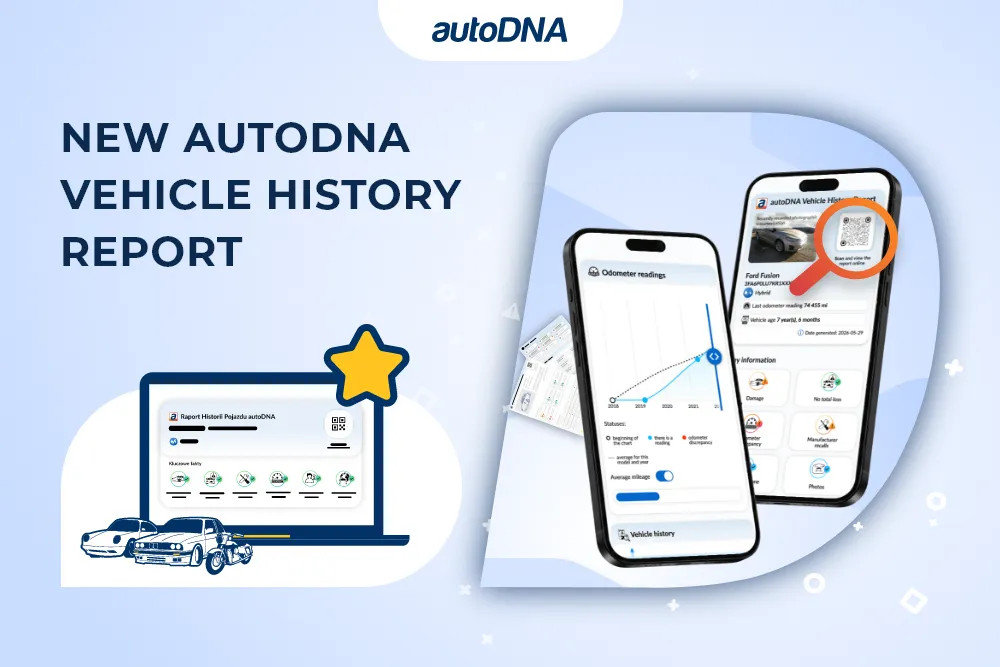
That’s why we’ve launched a new version of the Vehicle History Report, designed to be an even clearer and more transparent point of reference for both sides of the transaction.
Key takeaways
- The new autoDNA report can make it easier for buyers to filter offers and helps sellers build credibility.
- The key facts and the most important events from the car’s past are right at the top of the document.
- The mileage chart lets you spot inconsistencies at a glance, and information on fuel type, emissions standard, or emissions level helps you assess whether the vehicle may be restricted in Clean Transport Zones.
- Clear data and convenient navigation can help you save time and get up to speed on a vehicle’s history faster.
See what’s changed in the autoDNA Vehicle History Report. Check VIN
The new autoDNA report – for buyers and sellers alike
A clear vehicle history should be a given in the used car market. Access to information about a specific car’s past changes the way negotiations happen and takes unnecessary stress off both sides of the deal.
For years we’ve been watching how the market works and the challenges faced by both buyers and sellers. Those observations are exactly why we decided to update the autoDNA Vehicle History Report to make it fit the needs of every user, whichever side of the deal they’re on, even better.
When designing the new version, our main goal was to improve the report’s readability without cutting down on the data it presents. So we focused on organising how that data is displayed, making statuses clearer, and using visual elements that help you spot the information that needs your attention faster.- Lidia Małkiewicz, Graphic Design & UX Team Lead
| Buying a used car | Selling a used car |
|
|
What’s new in the report? A look at the key features
The new autoDNA report is built around maximum readability, intuitive navigation, and instant access to the most important facts in a vehicle’s history.
One of the main goals of the redesign was to reduce the effort needed to find and understand the key information. Instead of cutting down the amount of data, we reorganised its hierarchy: the user first gets a quick picture of the vehicle’s history, then can move smoothly on their own or with the help of navigation to the details of a specific event in the relevant section of the report.- Lidia Małkiewicz
Key features of the new report:
- At-a-glance overview
As soon as you open the report, you see a summary section. We’ve gathered the most relevant parameters, key facts, and an overview of the most important events in the vehicle’s history there. You don’t need to dig through dozens of rows of data, a single glance is enough to judge whether the car is worth your attention, or to show off its biggest strengths (e.g. a first owner, no odometer discrepancies, or no total loss).
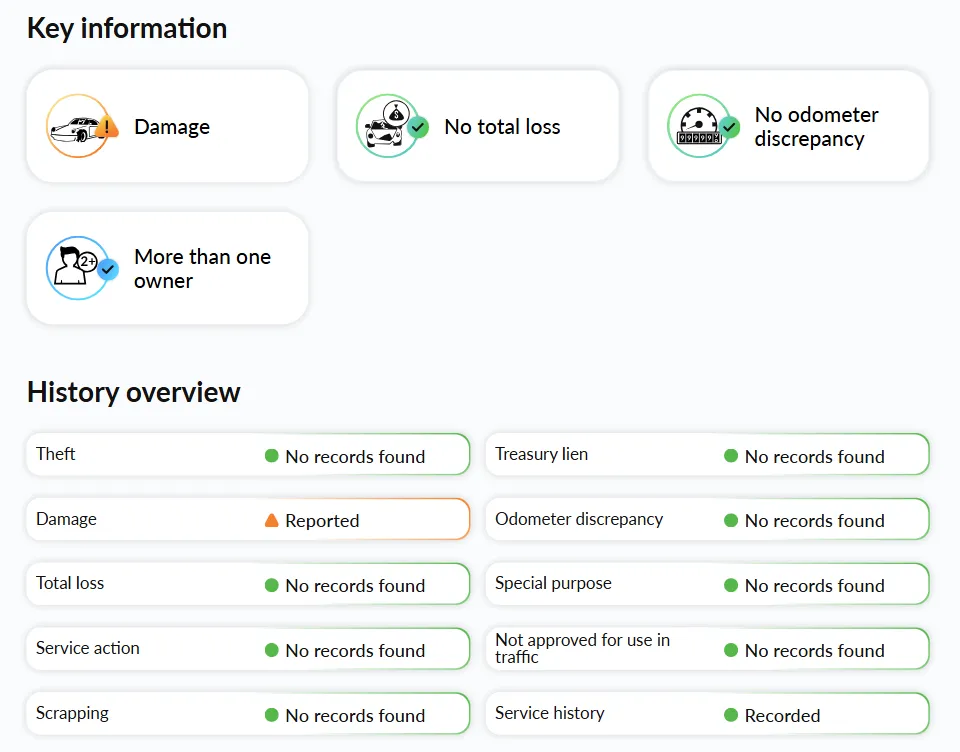
Introductory information in the autoDNA Vehicle History Report
- Interactive report navigation
The new quick-navigation system lets you move through the document easily and efficiently. One click on a specific event takes you straight to that entry on the timeline.
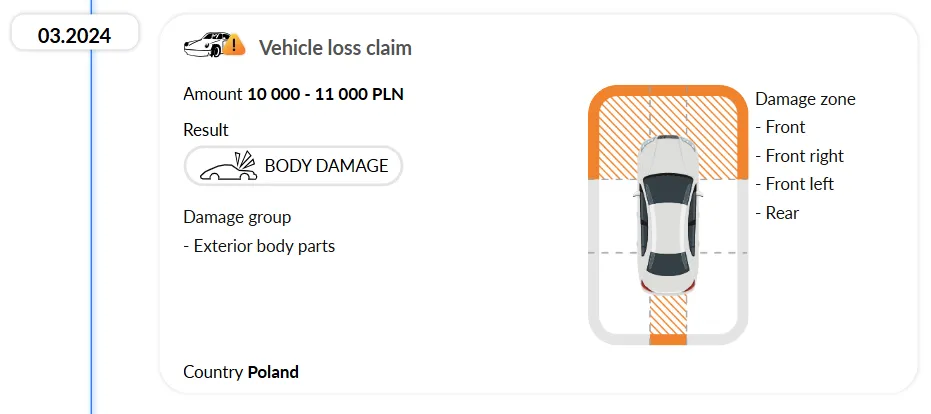
Interactive navigation in the autoDNA Vehicle History Report
- Emissions standard
In the Vehicle Information section we’ve included a precise indication of the emissions standard in g/km and/or shown it on an intuitive chart. Next to it you’ll find the Euro classification, which helps you assess whether the car can be driven without restrictions in an area covered by a Clean Transport Zone.
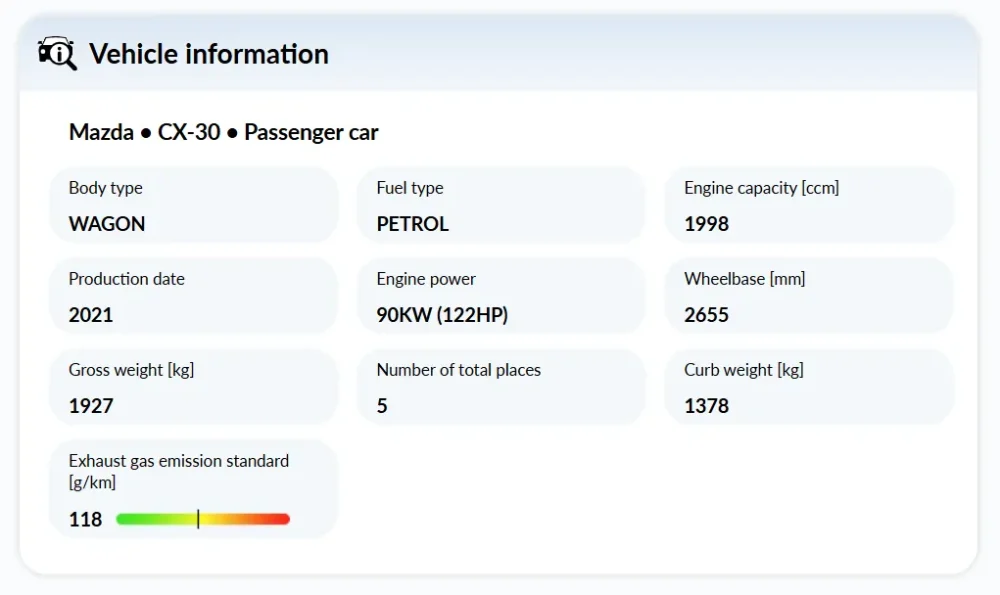
Emission standard in the Vehicle Information section of the new autoDNA Vehicle History Report
- Odometer reading chart
We’ve presented the numerical data on a clear timeline. The graphical presentation of odometer readings lets you spot unusual standstills or sudden, worrying jumps or drops in value at a glance.
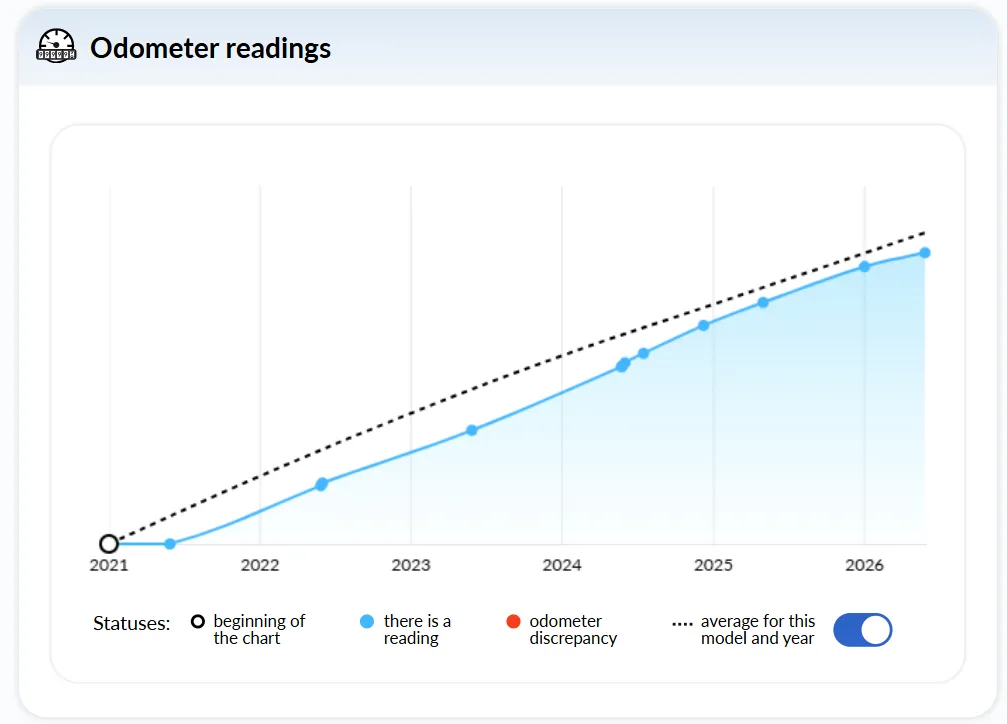
Odometer reading chart – the new autoDNA Vehicle History Report
See exactly what the new report looks like. Sample Vehicle History Report
How to use a VIN report when buying and selling a vehicle
The autoDNA report when buying a vehicle
- Pre-screen available offers
A vehicle history report lets you check an offer before you spend money getting there and time on a viewing. If the report reveals a level of risk you’re not willing to accept, you can immediately rule out the offer and focus on listings that better match what you’re looking for.
- Prepare for the viewing
Analysing the data in the report helps you verify the seller’s claims and identify which parts of the vehicle you should inspect especially carefully during the viewing.
- Take a more informed look at the price
Knowing the vehicle’s past gives you solid arguments when negotiating the final price. If the report reveals mileage discrepancies or past collisions the seller didn’t mention in the listing, you gain an objective basis for negotiating a lower price. On the other hand, if the vehicle’s history shows no issues, you know exactly what you’re paying for.
The autoDNA report when selling a vehicle
- Make your listing stand out
Adding the VIN number and information about an available history report to your listing (for example via autoDNA badges and QR codes) can catch buyers’ attention. This builds trust from the very first contact and sets your listing apart from hundreds of others.
- Save time
Sharing detailed data saves you from answering the same repeated questions. The report clears up buyers’ basic doubts, so the people who reach out to you are mainly those who are genuinely interested in buying.
- Prepare for negotiations
A transparent history is the best justification for your car’s price. A Vehicle History Report can serve as tangible proof of its value, making it easier to defend your asking price and avoid pressure to lower it without good reason.
The new autoDNA Vehicle History Report
A safer, more successful transaction on the used car market starts with knowing the vehicle. The refreshed autoDNA Vehicle History Report clears up uncertainty and builds trust, without unnecessary stress or complications – no matter which side of the deal you’re on.
At autoDNA.com, the market-leading VIN decoding tool, you can free VIN lookup on a given vehicle. All you need for this is the VIN number. In the reports, on used cars, you can find information that will allow you to check whether the seller is telling the truth or not. In the report, you can find data on various topics. One of them is the vehicle history or stolen vehicle bases. You can do a VIN check for free 24/7 throughout the year.